Should People Who Are Fit or A Healthy Weight Take GLP-1 Agonists?
The question in the title is one that is asked more and more, and answered in stories of Hollywood actors and athletes who have been experimenting with GLP-1. Think, for example, a runner who seeks to shave a minute off their 10K time by dropping 5 pounds. Should they do so with a GLP-1 such as ozempic, trizepatide, retatrutide or the newest offering soon to hit the market, orforglipron? Should you take a GLP agonist if you want to lose the 5-10 pounds and you are relatively fit and at a relatively healthy weight?
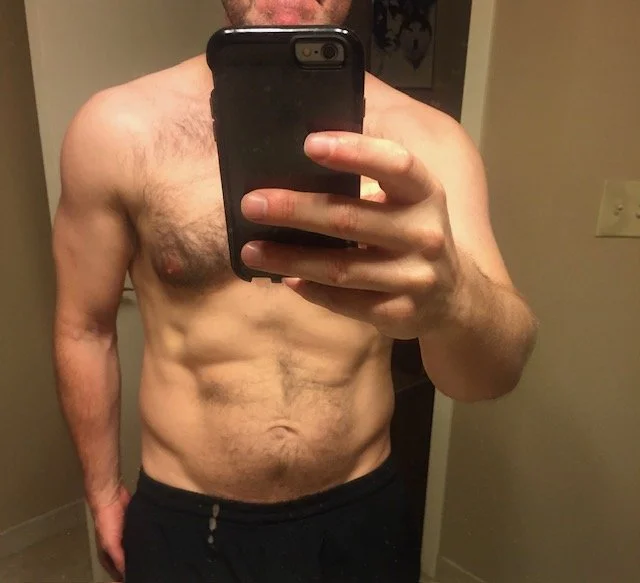
I recently tried just this. I used to be an avid runner and high intensity interval lifter in the weight room. I was fit. This is a picture of me when I could exercise vigorously. But after stress fracturing my talus area of my ankle running in a 48 hour “David Goggins” charity — and then running on that stress fracture for another year — my running days seem behind me and have not been able to run once in over a year. The damage to my entire foot structure has, to date, been too much and I’m slowly building back up my ability to hike further distances each month.
Still, after a year of slowly building up steps per month, and fasting in bouts, I still could not get to my desired weight of 165 (my high school weight). No matter how much I slowly gained steps and fasted intermittently or practiced time restricted feeding, I sat at about 170 pounds. So, in speaking with an MD friend of mine who has done a great deal of research on the numerous potentially geroprotective benefits of GLP-1 agonists, I decided I’d try a month and went of a moderate dose of Trizepatide. Trizepatide, inarguably for me, offers me a pathway back to 165, the weight I was in high school and the weight I was in this picture above. As I write, I’ve been on Trizepatide for 3 weeks, and I’m now 163,
But while weight correlates highly with health, it is certainly an incomplete measure. You can be a healthy weight and completely out of shape. Or stressed, sleep deprived, have a poor diet, and the list goes on and on. I’d rather be 20 pounds overweight and a non-smoker who sleeps well with low stress that “look” healthy due to a society that says you need to look a certain way.
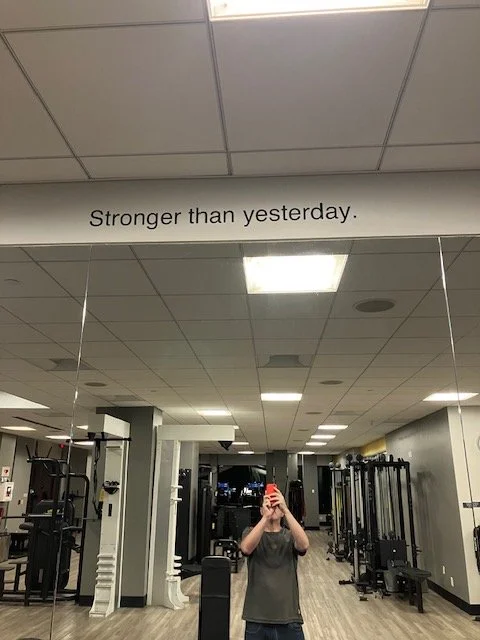
The ideal, of course, is to be at a healthy Body Mass Index and be a non-smoker with low stress. That’s what I’m going for, and what brought me to trying a month of GLP-1 (technically GIP and GLP-1) trizepatide. Which seems to be working. But looks can be deceiving, double entendre and all, as my after picture below shows, while I’m the weight of the original picture I’m certainly not as fit. Trizepatide has yet to do a single rep of lifting in the weight room for me, and if I had done a DEXA scan before and after, I’d guess I’ve likely lost some muscle mass despite lifting (some days) in the gym. These pictures was taken 2 and 7 days ago, respectively, the second after working out in the gym. My shoulders alone seem to be diminished in muscle mass and it’s pretty noticeable to me. Not ideal, especially as we age and lean muscle mass starts to correlate more and more with health span and lifespan.

But this still doesn’t answer the full question, and it’s a big one. Should I be on trizpetatide? Aesthetics are one thing but at 5-10 pounds these are aesthetics dictated to us by a society that supersizes weight with things like “success” and “willpower” when they have no causation at all and generally are unhealthy associations. Are there health benefits to the molecule itself beyond just weight loss? Here’s where we need to parse out being a healthy weight with taking a molecule with limited long-term data. Thus far, those on GLP-1 antognists seem, by and large, to be supported by the researchers to have health benefits in preventing sleep apnea, cardiovascular disease, kidney and liver disease, dementia, and the reduction of obesity related cancers. The short term averse effects are gastrointestinal; nausea (I’ve had), stomach pain (I’ve had), constipation, diarrhea and vomiting. But are these benefits simply the result of losing weight, or the process of the wight loss including reduced inulin sensitivity, which would make the molecules in the GLP agonists effective beyond weight loss? And do these benefits outweigh (horrible pun and all) possible muscle loss and weight cycling (yo-yo ups and downs) if you don’t indefinitely stay on the GLPs?
We don’t know yet, and I am going to lab experiment on myself a bit. Certainly I have lost weight, 10 pounds in the last month.
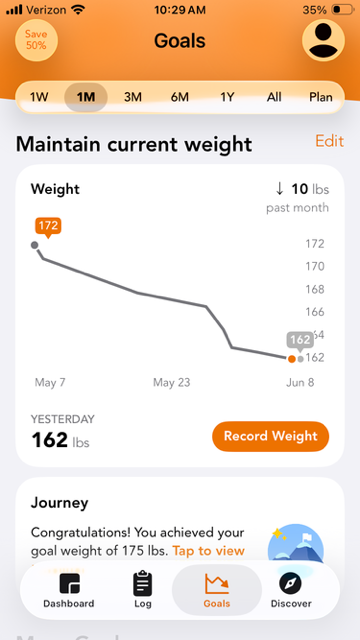
But let’s see what happens when I go off the trizepatide for a month. It’s times well for me, right around when I get lab measurements. So I’ll have pictures, weight records, and blood work. Then I’ll likely try a few months on/a few off.
The ideal, of course, is with healthy eating, exercise that I can do like walking and lifting weights, and some fasting, I can do this all on my own. Fasting, walking, lifting are all free and without any negative side effects if I don’t overtrain. But if I’m researching this as a side project, you’d better believe these companies, and the medical community in general, are trying to do the same. Here is my guess: There very well may be a world approaching where people with an unhealthy BMI (incidentally through no fault of their own; can we please set aside these false, antiquated and shameful notions that people who are overweight, who drink too much alcohol, who do drugs, gamble, or have any behavioral issue where there is continued use despite negative consequences have moral failing—I ran on a stress fractured foot for a year, my addiction was running, and as Dr. Gabor Mate author of ‘In the Realm of Hungry Ghosts’ said so eloquently on my podcast with him: we are all addicted to something, “it’s hard to get enough of something that almost works”) take standard doses of GLPs for life and potentially almost all of us micro dose them if they do offer benefits in and of themselves.
To be determined. Right now I admire my friends who have taken them despite some absurd notion by some this is “cheating” or that they “lack willpower." Combatting food noise has nothing to do with willpower. It was in talking to a few of these friends that had me try this experiment in the first place. I’m happy to try my on/off approach and gather data. And I’ll report back. It’s an exciting area to explore, I’m happy to be doing some exploration, and I can’t wait to learn more.
We are our own griefs. We are our own happinesses. We are our own remedies.
Mike Spivey